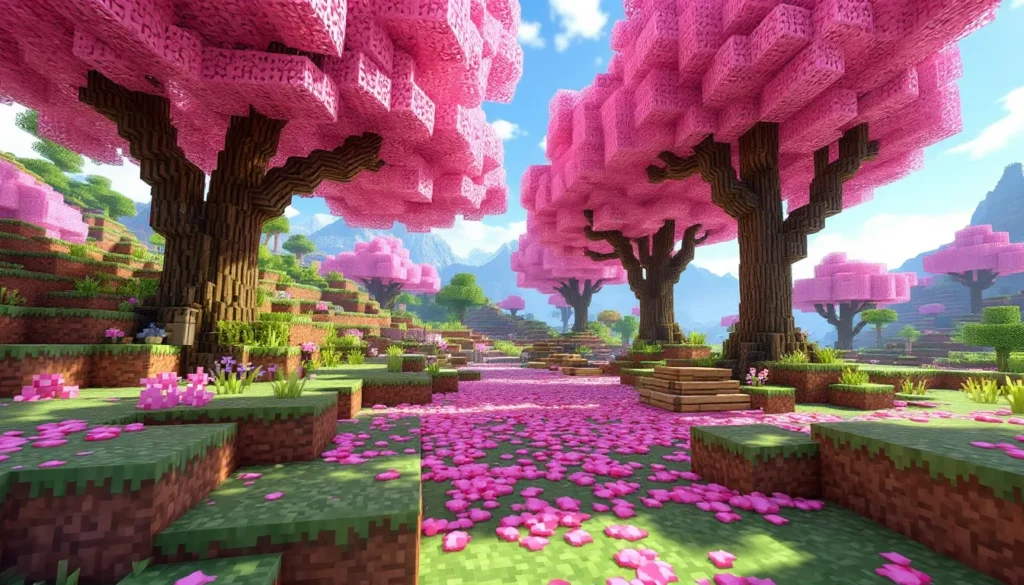
Lily of the Valley is one of Minecraft’s most elusive flowers, and if you’ve been combing through forests wondering why you can’t find it as easily as a dandelion or poppy, you’re not alone. This small white flower doesn’t spawn in every biome, and its rarity makes it valuable for specific crafting recipes and decorative builds. Whether you’re hunting it for white dye, brewing suspicious stew with unique effects, or just completing your botanical collection, understanding where it spawns and how to farm it efficiently will save you hours of aimless exploration.
This guide covers everything you need to know about Lily of the Valley in Minecraft, from pinpointing exact biomes where it generates naturally, to setting up automated flower farms, to comparing its utility against other white flowers like oxeye daisies and white tulips. We’ll also break down the suspicious stew recipe that uses this flower and explain why its wither effect makes it both dangerous and useful in the right hands.
Table of Contents
ToggleKey Takeaways
- Lily of the Valley Minecraft spawns exclusively in Forest and Flower Forest biomes, making it one of the game’s rarest flowers.
- Use bone meal on grass blocks in Forest biomes to generate Lily of the Valley when you can’t find a natural flower forest.
- The flower produces a poisonous suspicious stew that applies the Wither effect, making it ideal for PvP traps despite being harmful to eat.
- Fortune enchantments don’t affect Lily of the Valley drops; all small flowers yield exactly one item when harvested.
- For white dye production, Oxeye Daisies in plains are more efficient to farm than Lily of the Valley, which is best reserved for decorative and specialty brewing purposes.
What Is Lily of the Valley in Minecraft?
Lily of the Valley is a small white flower block introduced in Minecraft Java Edition 1.14 (Village & Pillage update, April 2019) and Bedrock Edition 1.10. It’s classified as a small flower, meaning it occupies a single block space and can be placed on grass blocks, dirt, coarse dirt, podzol, farmland, or moss blocks.
The flower stands out visually with its distinctive white bell-shaped blooms clustered on a green stem, mirroring its real-world counterpart. In-game, it serves three primary functions: crafting white dye, brewing suspicious stew with the wither effect, and decoration.
Unlike roses or poppies that generate in multiple biomes, Lily of the Valley has restricted spawn conditions, making it one of the rarer flowers players encounter during regular exploration. It doesn’t naturally appear in plains, sunflower plains, meadows, or most common biomes, you’ll need to venture into specific forest types to find it growing wild.
One unique property: Lily of the Valley is toxic in real life, and Mojang carried that theme into Minecraft. When used in suspicious stew, it applies the Wither effect for 12 seconds (Java Edition) or 10 seconds (Bedrock Edition), making it the only flower that produces a harmful potion effect rather than a beneficial one.
Where to Find Lily of the Valley in Minecraft
Forest Biomes and Spawn Locations
Lily of the Valley generates naturally in only two biome types: Forest and Flower Forest.
Forest biomes are the more common of the two. Regular forests feature oak and birch trees with occasional flowers scattered across the grass. Lily of the Valley spawns here but competes with poppies, dandelions, and azure bluets for spawn slots, so you might need to explore several forest patches before finding a cluster.
Flower Forest biomes are the jackpot. These rare biomes pack an absurd density of all flower types, including tulips, alliums, azure bluets, oxeye daisies, cornflowers, and, critically, Lily of the Valley. If you locate a flower forest, you’ll find dozens of lily clusters within a small area, making it the most efficient natural source.
Both biomes spawn on Java and Bedrock editions across all platforms (PC, PS5, Xbox Series X
|
S, Switch, and mobile). Seed selection can help: use seed databases or tools like Chunkbase to locate flower forests near spawn if you’re starting a new world specifically for flower farming.
One quirk: Lily of the Valley won’t spawn in dark forests, birch forests, old growth birch forests, or taiga variants, even though these are technically forest biomes. The generation code restricts it to standard forest and flower forest types only.
Bone Meal Generation Method
If you can’t find a flower forest or you’re playing on a world where the nearest one is thousands of blocks away, bone meal offers a reliable alternative.
When you apply bone meal to a grass block in a Forest or Flower Forest biome, it triggers random flower and grass generation in a small radius around the target block. Lily of the Valley is included in the potential spawn pool for these biomes, though the exact flower you get is randomized.
Here’s the process:
- Locate any forest biome (doesn’t need to be flower forest).
- Gather bone meal (craft from bones dropped by skeletons, or use a skeleton farm for bulk supply).
- Right-click (or tap, on mobile/console) bone meal on grass blocks.
- Repeat until Lily of the Valley appears.
This method is RNG-dependent, you might get poppies, dandelions, or grass several times before a lily spawns. But it’s faster than exploring if you have excess bone meal from a mob farm. On average, expect to use 10-20 bone meal per Lily of the Valley in a standard forest, fewer in a flower forest due to higher flower spawn rates.
One advantage: you can use this method in any Forest biome, even one that didn’t naturally generate Lily of the Valley during world creation. The bone meal mechanic pulls from the biome’s flower table, not from existing world generation.
How to Harvest and Collect Lily of the Valley
Best Tools for Harvesting
Lily of the Valley breaks instantly regardless of the tool you use. You can punch it with an empty hand, use any tool, or even destroy the block beneath it, the flower will drop as an item either way.
There’s no “best” tool for speed because break time is zero across the board. But, many players prefer holding shears or an axe while flower picking to avoid accidentally breaking grass blocks or leaves if they’re harvesting in a dense forest.
One important detail: if you destroy the block supporting the flower (grass block, dirt, etc.), the flower pops off and becomes a collectible item. This mechanic is useful when clearing land, till a grass block with a hoe, and any flower on top drops automatically.
Fortune Enchantment Effects
Fortune does not affect Lily of the Valley drops. Unlike crops such as wheat or potatoes, flowers always drop exactly one item when broken, regardless of enchantments.
This applies to all small flowers in Minecraft, not just Lily of the Valley. Fortune III on an axe or shovel won’t increase your yield, so there’s no need to use an enchanted tool when harvesting.
The only way to multiply your lily collection is through bone meal propagation (covered in the next section) or exploration. Some players mistakenly assume Fortune works on flowers because it affects tall grass (drops more seeds), that’s a different block type with different loot tables.
Growing Lily of the Valley: Tips and Techniques
Using Bone Meal for Flower Propagation
Bone meal is the core mechanic for “growing” Lily of the Valley, though technically you’re not growing individual flowers, you’re generating new ones in valid spawn areas.
Here’s how propagation works:
- Place a single Lily of the Valley on a grass block in a Forest or Flower Forest biome.
- Apply bone meal to surrounding grass blocks (not the flower itself).
- New flowers and grass will spawn randomly in a 15×5×15 area centered on the bone meal target.
- The new flowers match the biome’s spawn table, which includes Lily of the Valley in forests.
The randomness means you won’t get exclusively lilies, you’ll also generate poppies, dandelions, and other valid flowers. But over time, repeated bone meal applications will produce multiple lilies, especially in flower forests where the spawn weighting favors rare flowers.
One optimization: clear out other flowers in your target area first. Bone meal won’t replace existing flowers, so an open grass field gives you maximum spawn opportunities per bone meal use. Guides on flower farming mechanics often recommend this approach for rare flower collection.
Creating a Lily of the Valley Farm
A dedicated farm streamlines lily production if you need bulk quantities for dye or building projects.
Basic farm setup:
- Location: Build in a Forest or Flower Forest biome (required for bone meal generation).
- Platform: Create a flat grass platform, at least 15×15 blocks (the bone meal spawn radius).
- Borders: Add a fence or wall to prevent flowers from generating outside your collection area.
- Lighting: Place torches or lanterns to prevent mob spawns, but keep grass blocks exposed to sky (bone meal requires light level 9+ on the grass).
Harvesting process:
- Apply bone meal to grass blocks across the platform.
- Collect all flowers that spawn (including non-lilies).
- Replant a single Lily of the Valley on the platform.
- Repeat bone meal application.
This isn’t a “farm” in the traditional crop sense, there’s no growth cycle or watering. You’re essentially creating a controlled environment for RNG-based flower generation. On average, a 15×15 platform with a full stack of bone meal (64) yields 8-12 Lily of the Valley flowers in a standard forest, more in a flower forest.
Advanced tip: Combine this with a skeleton spawner or mob farm for infinite bone meal. A single skeleton spawner can produce hundreds of bones per hour with basic collection systems, giving you unlimited flower generation potential.
Lily of the Valley Uses and Crafting Recipes
White Dye Production
Lily of the Valley crafts into white dye with a 1:1 ratio. Place the flower in any crafting grid (inventory, crafting table, or Bedrock Edition’s 2×2 interface) and you’ll receive one white dye.
White dye has several applications:
- Dyeing sheep, wool, leather armor, beds, and banners
- Crafting light gray dye (combine with gray or black dye)
- Creating white concrete powder, terracotta, and stained glass
- Dyeing shulker boxes for organization systems
White dye is relatively common because bone meal itself functions as white dye in most recipes, and bone is abundant from skeleton farms. But, Lily of the Valley offers an alternative source if you’re running low on bones or prefer the aesthetic of flower-based dye systems.
Decorative and Building Applications
Lily of the Valley’s small size and pure white color make it a favorite for detailed builds. Common decorative uses include:
- Garden designs: Pairs well with dark oak fences, spruce planks, and stone pathways for medieval or cottage-core aesthetics.
- Interior decoration: Place in flower pots for windowsills, shelves, or table centerpieces in custom builds.
- Graveyard/memorial builds: The white color and real-world funeral associations make it thematically appropriate for cemetery designs.
- Contrast in flower forests: Plant alongside red tulips or orange tulips for visual pop in landscaping projects.
Flower pots are key here. A single Lily of the Valley in a pot creates a clean, minimalist decoration that works in almost any build style. Creative mode builders often use lilies in large-scale botanical gardens or museum displays.
One limitation: unlike sunflowers or rose bushes, Lily of the Valley is a single-block flower, so it doesn’t create the same visual impact in large open spaces. It excels in detail work rather than landscape-scale decoration.
Suspicious Stew Recipe and Effects
This is where Lily of the Valley becomes genuinely unique. Suspicious stew is a food item crafted with specific flowers to grant potion effects.
Recipe:
- 1 red mushroom
- 1 brown mushroom
- 1 bowl
- 1 Lily of the Valley
Craft this in any crafting grid, and you’ll receive suspicious stew that applies Wither for 12 seconds (Java) or 10 seconds (Bedrock) when consumed.
The Wither effect deals 1 heart of damage per second (0.5 hearts in Bedrock), making Lily of the Valley suspicious stew actively harmful to eat. This seems counterintuitive for a food item, but it has niche PvP and challenge map applications:
- Trap chests: Place in loot chests on PvP servers or adventure maps as a “poison” trap for unsuspecting players.
- Prank potential: Looks identical to other suspicious stews until consumed.
- Challenge runs: Some players use it in hardcore worlds or speedruns as a risk/reward mechanic (suspicious stew restores 6 hunger but applies effects).
In survival, there’s almost no reason to eat Lily of the Valley stew intentionally, the Wither damage outweighs the hunger restoration. But creative players have found uses in custom game modes and multiplayer servers where unexpected effects create interesting gameplay moments.
Lily of the Valley vs Other White Flowers in Minecraft
Minecraft has three white flowers: Lily of the Valley, Oxeye Daisy, and White Tulip. Here’s how they compare:
Spawn rarity:
- Lily of the Valley: Forest and Flower Forest only. Rarest of the three.
- Oxeye Daisy: Plains, sunflower plains, and flower forests. Common.
- White Tulip: Plains and flower forests. Moderately common.
White dye production:
All three craft into white dye at a 1:1 ratio, so they’re functionally identical for dye purposes. If you only need white dye, oxeye daisies or white tulips are easier to farm in plains biomes.
Suspicious stew effects:
- Lily of the Valley: Wither (harmful)
- Oxeye Daisy: Regeneration (beneficial)
- White Tulip: Weakness (debuff, but harmless to yourself)
Oxeye Daisy is objectively better for suspicious stew if you’re eating it yourself. Lily of the Valley’s Wither effect makes it the worst choice for personal consumption but the best for PvP traps or challenge maps.
Aesthetic differences:
Lily of the Valley has the most realistic, detailed texture, the bell-shaped blooms are recognizable. Oxeye daisies are larger with a yellow center, while white tulips are simple and clean. Choice depends on build style, but many players prefer lily’s texture for cottage or medieval builds.
Bottom line: If you’re farming for white dye efficiency, use oxeye daisies in plains. If you want rare decorative flowers or unique stew effects, Lily of the Valley is the specialist pick.
Trading and Economic Value
Lily of the Valley has zero direct trading applications with villagers. No villager profession (farmer, shepherd, etc.) accepts flowers as trade inputs, and flowers aren’t part of villager trade tables in any version of the game.
But, white dye crafted from Lily of the Valley does have indirect trading value:
- Shepherd villagers (Journeyman level) will buy 12 white dye for 1 emerald in Java Edition. This trade exists in Bedrock too, though exact quantities and levels sometimes vary by version.
- White dye trades aren’t particularly profitable compared to other emerald farms (stick trades with fletchers, paper with librarians, etc.), but they offer a renewable emerald source if you’ve automated bone meal and flower generation.
On multiplayer servers and economy-based realms, Lily of the Valley can have player-driven value:
- Rare flower collectors pay premiums for full sets of all flower types.
- Build-focused servers sometimes establish flower economies where decorative blocks have standardized prices.
- PvP servers might value Lily of the Valley stew for trap chests or assassination mechanics.
In vanilla single-player survival, though, Lily of the Valley’s economic value is minimal. It’s a decorative/crafting item, not a trading commodity. If you’re farming purely for emeralds, stick to high-efficiency villager trades rather than flower collection.
Advanced Tips and Tricks for Lily of the Valley
Automation and Redstone Integration
Fully automated Lily of the Valley farms aren’t possible in vanilla Minecraft because bone meal application requires manual player input, there’s no block or redstone mechanism that applies bone meal automatically.
But, semi-automated systems exist using community-created mods and datapacks. Mods like Create or Botania introduce mechanical systems that can simulate bone meal application, and some datapacks enable dispenser-based bone meal spreading.
In vanilla, the closest you can get to automation is:
- Skeleton farm → automatic bone collection: Use hoppers and chests to collect bones from a skeleton spawner. Craft bones into bone meal in bulk.
- Manual bone meal application: Apply bone meal to a prepared grass platform in a forest biome.
- Hopper collection (partial): If you’re breaking grass blocks beneath flowers, you can set up hopper minecarts or water flow systems to auto-collect drops.
This isn’t true automation (you’re still manually using bone meal), but it reduces tedium if you’re farming hundreds of lilies for large builds.
One advanced trick: combine this with an AFK fish farm or mob farm to generate bone meal while you’re away. Return to your base with full chests of bones, convert to bone meal, then spend 10-15 minutes applying it to your flower platform for bulk lily generation.
Best Practices for Rare Flower Collection
If you’re building a comprehensive flower collection (all 15+ flower types), here are optimized strategies:
1. Prioritize Flower Forests for initial collection:
A single flower forest biome contains nearly every flower type in the game. Spend 20-30 minutes harvesting one stack of each flower from a flower forest, then you won’t need to revisit.
2. Use shulker boxes for organization:
Carry color-coded shulker boxes (white for white flowers, red for red, etc.) to keep inventory sorted during long exploration trips. This is especially useful if you’re collecting multiple rare flowers across several biomes.
3. Mark biome coordinates:
Write down or use in-game maps to mark Forest and Flower Forest biomes near your base. If you need more Lily of the Valley later, you’ll know exactly where to return for bone meal farming.
4. Combine flower hunting with other exploration goals:
Don’t make dedicated trips just for flowers. When exploring for other resources (temples, villages, ocean monuments), note flower forest locations along the way. Detailed exploration guides often recommend multi-objective exploration to maximize efficiency per trip.
5. Keep a bone meal stockpile:
If you’ve found even one Lily of the Valley, you can generate infinite copies via bone meal in a forest biome. Store at least two stacks of bone meal in your base for emergency flower farming.
6. Silk Touch for grass blocks:
If you want to grow flowers in a non-forest biome for decorative purposes, use Silk Touch to collect grass blocks from the forest. Place them in your build location, then use bone meal, flowers won’t generate in the new location (bone meal reads the current chunk biome, not the block source), but you’ll have grass blocks that match your garden aesthetic.
Conclusion
Lily of the Valley might not be the most practical flower in Minecraft, but its rarity and unique properties make it worth tracking down. Whether you’re chasing the complete flower collection, setting up a white dye farm, or experimenting with suspicious stew mechanics in custom maps, knowing the exact biomes and bone meal techniques turns a tedious hunt into a five-minute task.
The key takeaways: stick to Forest and Flower Forest biomes for natural spawns, leverage bone meal if you can’t find a flower forest nearby, and remember that Fortune won’t help you, only exploration and RNG will. And if you’re ever tempted to eat that Lily of the Valley suspicious stew, maybe keep a bucket of milk handy. The Wither effect isn’t forgiving.