Crafting is the heartbeat of Minecraft. Strip away the mobs, the biomes, and the boss fights, and what’s left is a sandbox built on turning raw materials into tools, weapons, and wild contraptions. Yet plenty of players still fumble through the basics or skip past systems that would save them hours of grinding. This guide breaks down how to craft Minecraft craft recipes efficiently in 2026, from your first wooden pickaxe to advanced stations that separate hobbyists from true survival pros. Whether on Java 1.21 or Bedrock, the fundamentals stay the same.
Table of Contents
ToggleKey Takeaways
- Minecraft crafting transforms raw resources into tools and weapons through shape-sensitive recipes, making it the core progression system from your first wooden pickaxe to late-game power.
- The 2×2 inventory grid handles basic essentials, but a 3×3 crafting table is required for advanced items like pickaxes, armor, and redstone components.
- Master eight essential recipes—crafting table, sticks, furnace, chest, torch, pickaxe, bed, and bow—to survive the first three nights on any Minecraft seed.
- Advanced stations like anvils, enchanting tables, smithing tables, and brewing stands extend crafting capabilities for mid-to-late game progression and should be placed together in a crafting hub.
- Avoid common mistakes like wasting iron on stone tools, crafting full armor too early, and neglecting shields, which block 100% of frontal damage and represent a major skill gap.
- Use shift-click mass-crafting, pre-stack materials in dedicated chest slots, and build a central crafting hub to dramatically increase your crafting speed and efficiency.
What Crafting Means in Minecraft
Crafting is the system that turns raw resources (wood, stone, iron, redstone) into usable items. Every tool, weapon, block, and gadget in the game traces back to a recipe placed in a specific pattern.
In practical terms, crafting is how progression happens. Punch a tree, get wood, turn it into planks, then sticks, then a crafting table. From there, the tech tree opens up: pickaxes for stone, furnaces for iron, enchanting tables for late-game power.
Minecraft’s crafting system has stayed remarkably consistent since beta, with new recipes added each major update (the 1.21 Tricky Trials patch added the Mace and Trial Chambers loot). The logic, but, is the same: shape + materials = result.
How to Use the Crafting Table and Inventory Grid
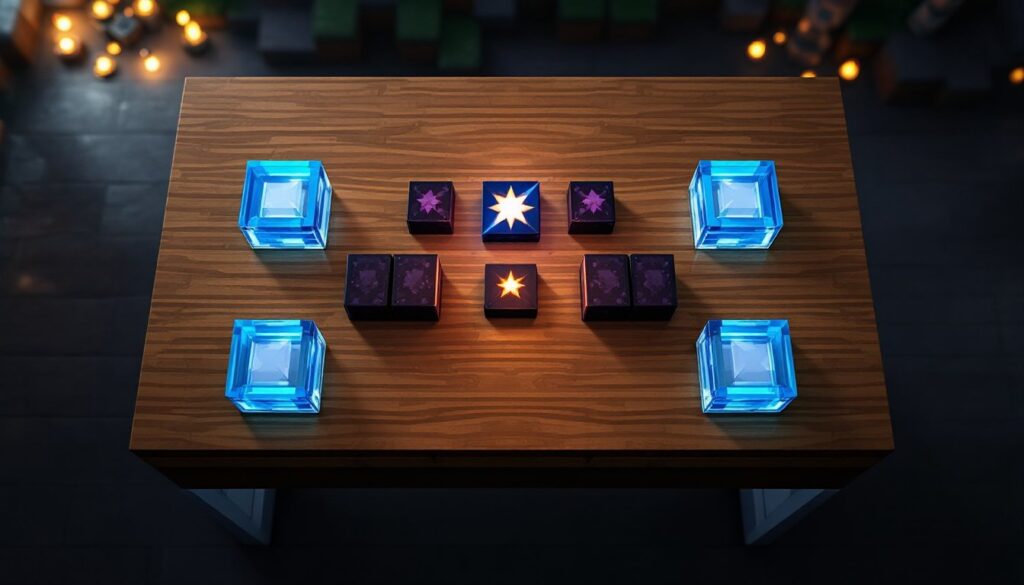
Open the inventory with E (PC) or the menu button on console/mobile, and a 2×2 grid sits next to the player model. That’s the starter crafting space. Placing four planks in the 2×2 produces a minecraft crafting table, which unlocks the full 3×3 grid when right-clicked (or tapped on Bedrock).
Recipes are shape-sensitive for most items. A pickaxe needs three materials across the top row and two sticks down the middle, period. Shapeless recipes (like mixing dye or making mushroom stew) are more forgiving.
The complete crafting guide to repair and rename items uses the same grid logic, just on a different station. For deeper walkthroughs on layout patterns, the classic Minecraft strategy guide on GameFAQs still holds up surprisingly well.
2×2 Inventory Crafting vs. 3×3 Crafting Table
The 2×2 inventory grid handles the bare essentials:
- Planks from logs
- Sticks from planks
- Crafting table, torches, and basic food prep
The 3×3 table is where real progression lives. Anything requiring more than four ingredients (tools, armor, chests, beds, redstone components) needs the full grid. Players who try to craft minecraft minecraft items like pickaxes from the inventory grid alone will hit a wall fast. Always carry a spare crafting table on long expeditions.
Essential Recipes Every Player Should Memorize
These are the recipes that should live in muscle memory:
- Crafting Table: 4 planks in a 2×2
- Sticks: 2 planks stacked vertically (yields 4)
- Furnace: 8 cobblestone around the edges of the 3×3
- Chest: 8 planks around the edges
- Torch: 1 stick + 1 coal stacked
- Pickaxe/Axe/Sword: material on top, sticks down the middle
- Bed: 3 wool + 3 planks in two rows
- Bow: 3 sticks + 3 string in a diagonal pattern
The complete guide to crafting and enchanting a bow goes deep on archery-specific tips. For melee mains, the legendary weapon guide covers everything from diamond sword DPS to Sharpness V min-maxing.
Learn these eight recipes and a player can survive the first three nights on any seed.
Advanced Crafting Stations and Their Uses
The crafting table is just the entry point. Mid-to-late game progression depends on specialized stations:
- Furnace / Blast Furnace / Smoker: smelting ores, cooking food (blast furnaces smelt metal 2x faster)
- Anvil: repairs, renames, and combines enchanted gear
- Enchanting Table: adds enchantments using XP and lapis lazuli
- Brewing Stand: potions, splash potions, lingering effects
- Smithing Table: netherite upgrades and armor trims (reworked in 1.20)
- Grindstone: strips enchantments and repairs without prior work penalty
- Loom: banner patterns
- Stonecutter: efficient stone variants with no waste
Brewing in particular has its own learning curve. The guide to brewing every effect walks through ingredient chains and modifiers. For lighting-focused builds, the guide to crafting stunning lighting shows how stations like the stonecutter make decor work way cleaner.
These stations don’t replace the crafting table, they extend it. A proper crafting room has all of them within two blocks of each other.
Common Crafting Mistakes and How to Avoid Them
Even experienced players make these errors:
- Wasting iron on stone-tier tools. Use cobblestone tools until iron is plentiful, then jump straight to iron picks for diamond mining.
- Crafting full armor sets too early. Iron leggings and chestplate are the priority: helmet and boots can stay leather until enchants are available.
- Forgetting the recipe book. Tapping the green book icon in the crafting UI auto-suggests recipes from current inventory. Most veterans toggle this off, but new players should keep it on.
- Not crafting shields. A shield (6 planks + 1 iron ingot) blocks 100% of frontal damage when held. As GamesRadar+ has covered across multiple survival guides, shield use is the single biggest skill gap between casuals and pros.
- Ignoring stack efficiency. Crafting 9 ingots into a block saves inventory space and lets the stonecutter or smithing table work faster.
Pro Tips to Craft Faster and Smarter
Speed comes from preparation, not finger speed. A few habits that compound:
- Shift-click to mass-craft. Holding Shift while clicking the output slot crafts as many copies as materials allow. Saves minutes per session.
- Use the number keys (1-9) on PC to hotbar items directly from the crafting output.
- Pre-stack materials. Keep planks, sticks, cobblestone, and iron in dedicated chest slots near the crafting table.
- Build a crafting hub. Place the table, furnace, smithing table, anvil, and enchanting table in a 3×3 layout. No walking between stations.
- Carry a portable kit. One crafting table, one furnace, six wood, and a bucket of water handles 90% of away-from-base needs.
For vertical builds and quick base access, the elevation and safety tips for ladders save real time. Builders working on bigger projects should reference the ultimate 2026 guide for castle layouts that include integrated crafting rooms. Game Rant’s feature coverage often highlights speedrun-tier crafting setups worth copying.